Chinch Bug Damage in San Antonio St. Augustine Lawns: The June Window to Catch It Early
Macario Brothers Lawn Care • June 2026 • San Antonio, TX
Chinch bug populations in San Antonio St. Augustine lawns build through May and become destructive in June and July. Caught early — small patches of yellowing in the sunniest parts of the lawn — one targeted treatment ends the outbreak. Waiting two to three weeks costs you 5 to 10 times more in damaged sod that has to be replaced. The soap flush test confirms chinch bugs in 5 minutes. June is the right month to walk your lawn weekly and watch for the early signs.
Why This Matters for San Antonio Homeowners
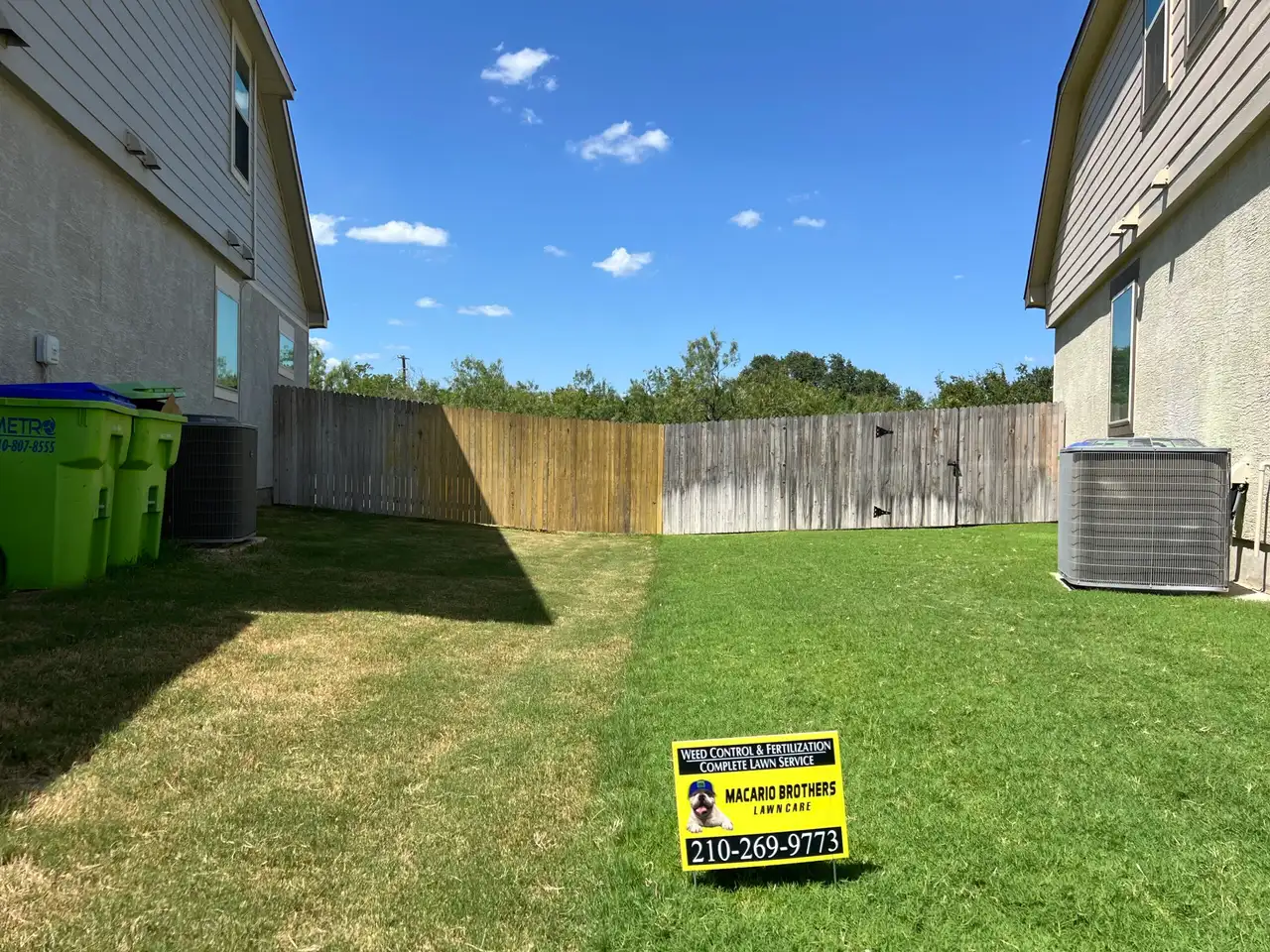
If you live in San Antonio and you have a St. Augustine lawn, chinch bug damage is one of the most expensive things that can happen to your yard between now and August. Caught early, the fix is straightforward and inexpensive. Caught late, you are looking at major sod replacement. The difference between those two outcomes is often just a few weeks of attention.
What Chinch Bugs Are
Identification
Adults are about a sixteenth of an inch long with black bodies and white wing patches. Nymphs are bright red with a white band. They live at the base of grass blades right at the soil line.
How They Feed
They pierce grass stems and inject a toxin that kills the grass tissue. Damage compounds fast — a single female lays 100 to 300 eggs, and in San Antonio heat two to three generations hatch per season.
Turf Susceptibility
St. Augustine is the most susceptible turf in our area. Bermuda is more resistant but not immune. Zoysia is moderately susceptible. A population can chew through several thousand square feet of St. Augustine in 3 to 4 weeks.
Why San Antonio Lawns Are Vulnerable
Heat & Drought
Chinch bugs thrive above 90 degrees and prefer dry conditions — exactly the summer San Antonio delivers from June through August.
Thick Thatch
Thick thatch layers common in older St. Augustine lawns provide cover and humidity at the soil line — ideal chinch bug habitat.
Watering Confusion
Early damage looks like drought stress, so homeowners water more. But adding water does nothing for chinch bug damage — and delays the correct diagnosis.
How to Spot Damage at Every Stage
The lawns we save without major replacement work are the ones caught in stage 1 or early stage 2.
Stage 1 — Early
Small patches of yellowing grass (3 to 6 feet across) in the hottest, sunniest parts of the lawn. Easy to mistake for drought stress. Patches do not green back up after a deep watering.
Stage 2 — Established
Straw-colored to brown patches. New patches appear at the edges. Grass at the boundary between healthy and damaged is wilted even after irrigation. Population is well established.
Stage 3 — Severe
Large connected brown areas. Grass pulls up easily. New runners are killed almost as soon as they appear. Recovery requires sodding — costs can reach $1,500 to $5,000 or more.
The Soap Flush Test — 5 Minutes to a Diagnosis
Mix 2 tablespoons of dish soap into a gallon of water. Pour slowly over a one-foot square at the boundary between green grass and yellowing area. Wait 2 to 5 minutes.
If chinch bugs are present, the soap drives them to the surface. You will see them on the grass blades. Counts of 10 or more in that square foot mean an active infestation needing immediate treatment. Test multiple spots at the edges of suspected damage — chinch bugs cluster, so one test square might be empty while another a few feet away is loaded.
What Treatment Looks Like
Application Process
A targeted insecticide labeled for chinch bug control on warm-season turf is applied to reach the soil surface where the bugs live. We water lightly before application to break surface tension, apply the product, then water in after.
Treatment Timeline
Most products provide 3 to 6 weeks of residual control. Active outbreaks typically stop spreading within 5 to 7 days. A follow-up application 21 to 28 days later catches the next generation as eggs hatch.
Treatment Cost
Treatment for a typical residential lot in San Antonio runs $80 to $150 per visit. Two treatments to fully control an outbreak is $160 to $300 — far less than sod replacement.
The Cost of Early Action vs. Delay
Five minutes of soap flush testing per week through May and June can save you thousands of dollars and months of frustration.
Stage 1 Catch
One $90–$150 treatment. Full recovery within a month. Total cost roughly $150.
Stage 2 Catch
Two treatments at $80–$150 each plus 6 to 10 weeks of recovery. Total cost roughly $300 plus your time.
Stage 3 Damage
Treatments to stop spread plus partial sod replacement. Total cost $1,500 to $5,000 plus months of looking at a damaged lawn.
Preventive Programs & Ongoing Care
Preventive Treatment
For lawns with chinch bug history, a single preventive treatment in late May or early June costs $90 to $130 — and our customers who switched to preventive programs have not had a single sod replacement since.
Weekly Lawn Walks
Walk the lawn weekly May through September. Check the hottest sunniest areas first. Do a soap flush test at any suspicious yellowing within 48 hours of noticing it.
Mowing & Thatch Management
Maintain 3.5 to 4 inches mowing height for St. Augustine in summer. Manage thatch through proper watering and occasional aeration. Stressed lawns are more attractive to egg-laying females.
Frequently Asked Questions
Can I treat chinch bugs myself?
Yes, with a labeled product applied correctly. The keys are correct identification (confirm with soap flush), correct rate, and proper watering before and after application.
How is chinch bug damage different from grub damage?
Chinch bugs peak in June and July. Grubs cause damage in August and September. Chinch bug damage kills stems at the base. Grub damage shows grass lifting because roots are gone.
Are chinch bugs harmful to people or pets?
No. They feed only on grasses. They do not bite or cause skin reactions.
Will mowing higher help prevent chinch bugs?
Maintaining proper mowing height reduces overall stress on the lawn, making it less attractive to egg-laying females. It is not a complete preventive but it helps.
Act Now — Before Stage 1 Becomes Stage 3
If you have any yellowing patches in your St. Augustine that have appeared in the last 2 to 3 weeks, do the soap flush test today. If you find chinch bugs, do not wait. Schedule treatment within a few days. We serve San Antonio and surrounding communities.