Fall Cleanup
Fall and Winter Are the Safe Window to Prune Oaks in San Antonio
Macario Brothers Lawn Care • October 2026 • San Antonio, TX • 7 min read
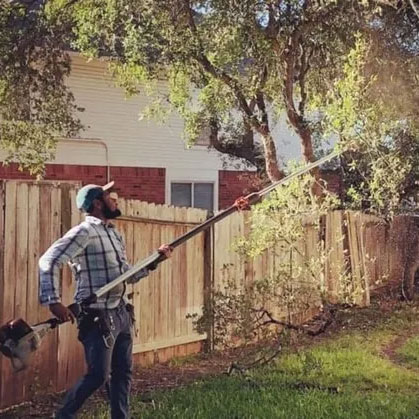
Short Answer: Oak wilt is a fungal disease that has killed large numbers of live oaks across San Antonio and the Hill Country, and pruning at the wrong time of year is one of the ways it spreads. Texas A&M Forest Service has long advised avoiding oak pruning from roughly February through June, when the beetles that carry the fungus are most active and fungal mats are forming. That makes fall and winter the safer window. Regardless of season, every cut on an oak should be painted immediately.
Most fall cleanup conversations here stay on leaves and beds, but there is a tree question that belongs in October planning and it carries higher stakes than anything else on the list. If you have oaks and they need pruning, the time of year you do it matters a great deal.
Oak wilt has changed the landscape across central Texas, and San Antonio sits in the middle of the affected region. Here is what the disease does, why timing matters, and how the safe pruning window works.
What Oak Wilt Is
Oak wilt is caused by a fungus that invades the water conducting vessels of oak trees. The tree responds by trying to wall off the infection, and in doing so it blocks its own water transport. The result is that the tree effectively dies of thirst while standing in adequate soil moisture.
Red oaks are highly susceptible and typically die quickly, often within weeks of showing symptoms. They also play a central role in spread, because infected red oaks can produce fungal mats under the bark.
Live oaks are the greater concern in San Antonio because of how they grow. Live oaks commonly form interconnected root systems with neighboring live oaks, and the fungus moves through those root connections from tree to tree. That is why oak wilt in a live oak population tends to kill in expanding patches rather than picking off individuals, and why a neighborhood can lose a row of mature trees.
Those mature live oaks are frequently the most valuable feature on a San Antonio property, and they are not replaceable on any timescale that matters to a homeowner.
How Pruning Enters the Picture
There are two main routes of spread, and pruning affects one of them directly.
Root transmission is the local route, moving the fungus between connected trees underground. That spread is slow and it is addressed through trenching to sever root connections, which is specialist work.
The other route is overland, and it depends on insects. Small sap feeding beetles, called nitidulid beetles, visit the fungal mats that form on infected red oaks and pick up spores. Those same beetles are strongly attracted to fresh wounds on healthy oaks, because wounded trees release sap.
So the mechanism is straightforward. A fresh pruning cut on a healthy oak is an open invitation to an insect that may be carrying spores from an infected tree. That is how a new infection center starts in a neighborhood that did not have one.
The window when this risk peaks is the period when beetles are most active and fungal mats are most likely to be forming, which in central Texas is spring.
The Pruning Window
Texas A&M Forest Service has long advised avoiding oak pruning during the higher risk period, generally described as February through June, with the peak concern in spring.
That guidance leaves the cooler months as the preferred window. Pruning from roughly July through January carries lower risk, and the coldest part of that range is generally considered safest, since beetle activity drops with temperature.
For a San Antonio homeowner, that makes fall and winter the practical time to address oak work. It lines up conveniently with the rest of fall cleanup, and it is a reason to think about tree work now rather than deferring it to spring when everything else in the yard is getting attention.
Because this guidance can be updated and because local conditions vary, confirming current recommendations with Texas A&M Forest Service or a certified arborist is worthwhile rather than relying on a date range from an article.
Paint Every Cut, Every Time
This is the single most important practical step and it is the one most commonly skipped.
Wound paint on oaks runs contrary to general arboriculture advice, which for most species discourages sealing cuts. Oaks in oak wilt country are the exception, and the reason is specific. The paint is not there to help the tree heal. It is there to keep the wound from smelling attractive to beetles during the hours immediately after cutting.
Timing matters more than product. The paint should go on immediately, within minutes of the cut, not at the end of the day when the crew finishes. Beetles find fresh wounds quickly.
This applies to any wound, not just deliberate pruning. Storm damage, a limb torn in wind, a trunk scraped by equipment, or damage from a vehicle all create the same opening. If an oak gets wounded at any point in the year, painting it promptly is the response.
It also applies year round rather than only during the risky months. The seasonal window reduces risk. Painting addresses the specific wound.
Other Ways It Spreads
Two more routes are worth knowing because homeowners control both.
Firewood is one. Wood cut from an oak that died of oak wilt can carry the fungus, and red oak firewood in particular can produce fungal mats if it is stored with the bark on. Moving that wood moves the disease. If you have oak firewood of uncertain origin, keeping it covered with plastic sealed at the ground is the commonly recommended precaution, and not moving it to a new location matters more.
Contaminated tools are the other. Pruning equipment used on an infected tree and then on a healthy one can transfer the fungus. Any crew working on oaks here should be sanitizing tools between trees, and it is a fair question to ask.
These are also the reasons to be careful about who does oak work on your property. A crew unfamiliar with local disease pressure may prune on the wrong schedule, skip the paint, or move wood, and the consequences land on trees that took a century to grow.
Recognizing It Early
Knowing what to look for matters because response options narrow as the disease progresses.
On live oaks, the classic sign is veinal necrosis, meaning leaves where the veins turn yellow or brown while the tissue between them stays greener, producing a distinct pattern. Leaf drop follows, often heavy and out of season.
On red oaks, symptoms tend to move fast. Leaves wilt and turn from the top of the canopy downward, and the tree may go from apparently healthy to dead within a season.
Pattern matters as much as the individual tree. Oak wilt spreading through root connections produces a visible progression, with trees declining in sequence outward from a center. A single struggling oak surrounded by healthy ones is more likely to be something else. A group declining in a spreading pattern is a stronger signal.
If you suspect it, that is a call to a certified arborist rather than a wait and see. Confirmation requires proper diagnosis, and the management options, including trenching to sever root connections, depend on catching it before it has moved far.
What to Do Next
If your oaks need pruning, whether for clearance, deadwood, or storm damage risk, plan that work for the cooler months rather than deferring it to spring. Fall and winter are the safer window and it lines up with the rest of your cleanup.
Make sure whoever does the work paints every cut immediately and sanitizes tools between trees. Ask about both before hiring, because the answer tells you whether they understand local conditions.
Do not prune oaks during the higher risk spring months unless there is a genuine safety issue that cannot wait, and if an emergency cut is unavoidable, paint it immediately.
Walk your property and look at your oaks for the veinal pattern on live oak leaves or rapid canopy decline on red oaks, and note whether any decline is spreading in a pattern between neighboring trees.
For fall cleanup scheduling and to coordinate the seasonal work on your property, call Macario Brothers Lawn Care at 210-269-9773 or visit macariobrotherslawncare.com. We are a family owned business serving San Antonio, and for oak diagnosis or removal we will point you to a certified arborist rather than guess.