Pre-Fall Aeration for San Antonio Lawns
Why July Is When Smart Homeowners Plan the Service
Macario Brothers Lawn Care • July 2026 • San Antonio, TX
The lawns that look the best in San Antonio next April are the ones that get aerated in September of this year — and the ones that get the best aeration service are the ones whose homeowners decide in July. Booking now beats calling in September: a July audit is more accurate during peak heat stress when problems are visible, and aeration crews fill their September schedules early.
What Aeration Actually Does
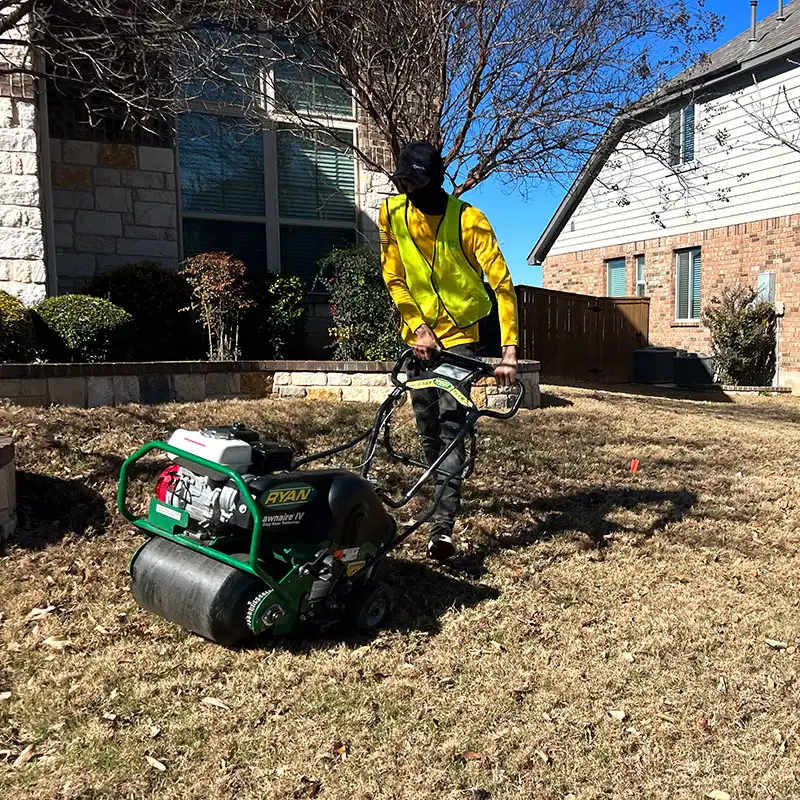
Core aeration uses a machine with hollow tines to pull plugs of soil and thatch out of the lawn at regular intervals. The plugs are usually about half an inch in diameter and two to three inches deep. They are left on the surface to break down naturally over the next two weeks. The holes that remain become channels for water, oxygen, and nutrients to reach the root zone directly rather than fighting their way through compacted surface soil.
Compaction in the top three to four inches of soil is broken up. Thatch is mechanically reduced where the tines pull through it. Water infiltration improves dramatically. Roots respond by growing deeper into the newly accessible soil profile — the underlying biology that pays back the service over the months following.
Why September Is the Right Window for Warm-Season Lawns
Bermuda, St. Augustine, and Zoysia are warm-season grasses. Their peak active growth runs from late spring through early fall. In San Antonio, the ideal aeration window is mid-September through early October — soil temperatures are still in the mid-70s, heat stress is past peak, and the lawn has six to eight weeks of strong recovery growth before dormancy.
Too Early: July
The grass is under peak heat stress. Recovery from mechanical disruption competes with the daily demands of staying alive. Not recommended for most lawns.
Ideal Window: Mid-September
Soil temperatures still warm, heat stress past peak, six to eight weeks of recovery growth remaining. This is the window that books up first.
Too Late: November+
The grass is slowing down. Channels close over winter without the root growth response that makes the service worthwhile. Diminishing returns.
What the July Audit Looks At
When we walk a property in July for an aeration audit, we evaluate five variables that determine whether aeration is the right service and what to combine it with.
1. Soil Compaction
We use a screwdriver test across multiple zones. Healthy soil: slides in 6 inches easily. Compacted soil: stops at 2 inches. Widespread resistance = strong aeration candidate.
2. Thatch Layer
We cut a small wedge of sod and measure the layer between green tops and mineral soil. Under ½ inch is normal. ¾ to 1½ inches warrants aeration. Thicker needs verticutting too.
3. Water Behavior
We watch during a normal irrigation cycle. Runoff within 5 minutes, water beading up, or ponding lasting 30+ minutes all indicate compaction that aeration can fix.
4. Root Depth
We pull grass from several zones. Healthy San Antonio roots should reach 4–6 inches into the soil. Short, dark, or sparse roots indicate aeration will produce a meaningful response.
5. Overall Lawn Health
Aeration adds stress during recovery. Lawns with active disease, severe insect damage, or heat-collapsed turf may need stabilization first, with aeration the following year.
What Aeration Combines With
Aeration alone is valuable. Combined with the right follow-up services, the benefit compounds substantially. The right combination depends on what your July audit shows.
Thin Coverage
Aeration + light topdressing of compost or sand. A quarter inch of compost applied within a week works into the holes and adds organic matter that supports root growth.
Hydrophobic Soil
Aeration + wetting agent application. The aeration opens the soil profile and the wetting agent restores the soil's ability to absorb and hold water. Improvement visible within four weeks.
Moderate Thatch
Aeration alone usually addresses thatch in the ½ to 1½ inch range. A light topdressing encourages decomposition through introduced soil microbiology.
Multiple Issues
We sequence services across two seasons. A September aeration followed by a March topdressing and May verticut often produces better results than compressing everything into one fall window.
How Aeration Affects Different Grass Types
Bermuda
Responds fastest. Aggressive horizontal growth means new stolons fill in across the holes within 2–3 weeks. Bermuda lawns aerated in September often show visible improvement by early October.
St. Augustine
Recovers a little slower but the benefit may be even larger. Root systems are notoriously shallow on San Antonio clay soils. The spring response after a September aeration is the most pronounced of any warm-season grass we work with.
Zoysia
The most thatch-prone warm-season grass we maintain in San Antonio. The thatch reduction effect is particularly valuable. We often recommend slightly more aggressive aeration — closer hole spacing, deeper tine depth.
What Aeration Costs in San Antonio
Pricing varies by lot size and property configuration. These are rough ranges for residential properties in our service area.
¼ Acre or Smaller
$150 – $250
Core aeration only
⅓ to ½ Acre
$250 – $400
Core aeration only
Aeration + Topdressing
$400 – $700
Typical residential lot; compost adds ~$0.10–$0.20/sq ft
Compared to sodding at $1–$2 per square foot installed, aeration is one of the highest return investments in lawn care. A single aeration service on the right lawn can prevent the kind of decline that leads to sod replacement.
Why Booking in July Beats Booking in September
Scheduling Advantage
Good crews fill their September calendars by late August. Homeowners who call after Labor Day often end up on a waiting list that pushes their service into October when conditions are less favorable. Booking in July secures your spot in the optimal soil temperature window.
Preparation Window
Booking in July lets us adjust your watering schedule, set pre-aeration mowing patterns, and resolve any disease or insect issues before September — so the service lands on a lawn that is ready to respond.
For homeowners not on our regular program, a July consultation lets us document what we see, give you a proposal that holds for the September window, and answer questions about what to do between now and the service. No obligation. Worth doing whether you book with us or someone else.