Take-All Root Rot in San Antonio: Spotting It Early and Saving Your Lawn
Macario Brothers Lawn Care • May 2026 • San Antonio, TX
Take-all root rot is one of the most common and damaging diseases on San Antonio St. Augustine lawns. The earliest signs are yellowing in irregular patches, thinning grass that pulls up easily because the roots are gone, and damage that does not respond to watering. Catching it in the yellowing stage is the difference between treatment that saves the lawn and treatment that comes too late.
What Take-All Root Rot Is
Take-all root rot is caused by a soil fungus that attacks grass roots. The fungus is widespread in San Antonio soils and only causes visible damage when conditions favor it: alkaline pH, compaction, poor drainage, and stressed turf. The disease attacks from below ground first. The fungus colonizes the root system, killing roots and gradually destroying the plant's ability to absorb water and nutrients. By the time you see surface symptoms, the roots have already been compromised.
St. Augustine grass is the most commonly affected in our area, but Bermuda and Zoysia can also develop take-all under the right conditions. It is widespread across San Antonio, Alamo Heights, Helotes, and the surrounding area.
The Earliest Signs to Watch For
Catching take-all early gives you a much better chance of saving the lawn. Here are the warning signs:
Irregular Yellowing
Patches of yellowing grass with irregular shapes, often appearing in spring or early summer — even when watering and fertilization have been consistent.
Grass Pulls Up Easily
A gentle tug on grass at the patch edge produces sections that come up cleanly. The roots have been destroyed underneath, leaving nothing to anchor the turf.
No Response to Watering
Damage that does not improve with more water is one of the strongest early indicators. The roots can no longer absorb water regardless of how much you apply.
Confirming the Diagnosis
The most reliable way to confirm take-all root rot is to dig up a section of grass at the edge of an affected area and look at the roots. Healthy St. Augustine roots are white and extend several inches into the soil. Take-all roots are dark, rotted, and short — sometimes barely present at all.
If you can pull up handfuls of grass with no resistance and minimal root attached, take-all is likely. Visual inspection plus root examination is usually enough to confirm without lab testing.
Conditions That Favor Take-All Root Rot
Understanding what fuels the disease helps prevent recurrence after treatment.
Alkaline Soil pH
Most San Antonio soils have a pH above 7.5, which is the ideal range for this fungus to thrive.
Compaction & Poor Drainage
Compacted soils with poor oxygen exchange and areas where water lingers create prime conditions for the disease.
Excess Nitrogen & Stress
Too much nitrogen pushes soft top growth without supporting roots. Drought, traffic, and scalping mowing all weaken turf and invite the disease.
Treatment Approach
Effective take-all treatment requires combining several actions — no single treatment is sufficient.
Fungicide Applications
Azoxystrobin, propiconazole, and tebuconazole all have track records for take-all control. Timing targets soil temperatures of 65–70°F — typically February to March and again in fall in San Antonio.
Soil Chemistry Corrections
Sulfur applications can gradually reduce soil pH toward the more grass-friendly 6.0 to 7.0 range over multiple seasons.
Watering & Fertility Adjustments
Less frequent, deeper watering in the mornings only. Reduce nitrogen during active disease and supplement with potassium to improve disease resistance.
Aeration
Core aeration improves soil oxygen levels and reduces compaction, directly targeting two of the key conditions that favor the disease.
Recovery Timeline
Take-all recovery is slow. Even with proper treatment, the dead grass does not green back up — the disease has destroyed the roots, and the grass must regrow from surviving stolons or be replaced through plugging or sodding.
Light to Moderate Damage
Often recovers within 3 to 6 months as healthy stolons spread into affected areas on their own.
Heavy Damage
Requires sodding or plugging to recover within a reasonable timeframe. Stopping the spread is what treatment accomplishes first.
Common Mistakes That Make It Worse
Watering More
Applying more water in response to yellow grass directly feeds the disease. Wet conditions are exactly what take-all thrives in.
High-Nitrogen Fertilizer
Applying extra nitrogen to "help" the lawn pushes soft growth that invites the disease to spread further.
Wrong Fungicide or Timing
Take-all fungicide timing is specific. Treating with the wrong product or outside the correct soil temperature window wastes time and money.
Ignoring Soil Chemistry
Treating only the visible disease without addressing the underlying alkaline soil conditions guarantees recurrence the following season.
Prevention Going Forward
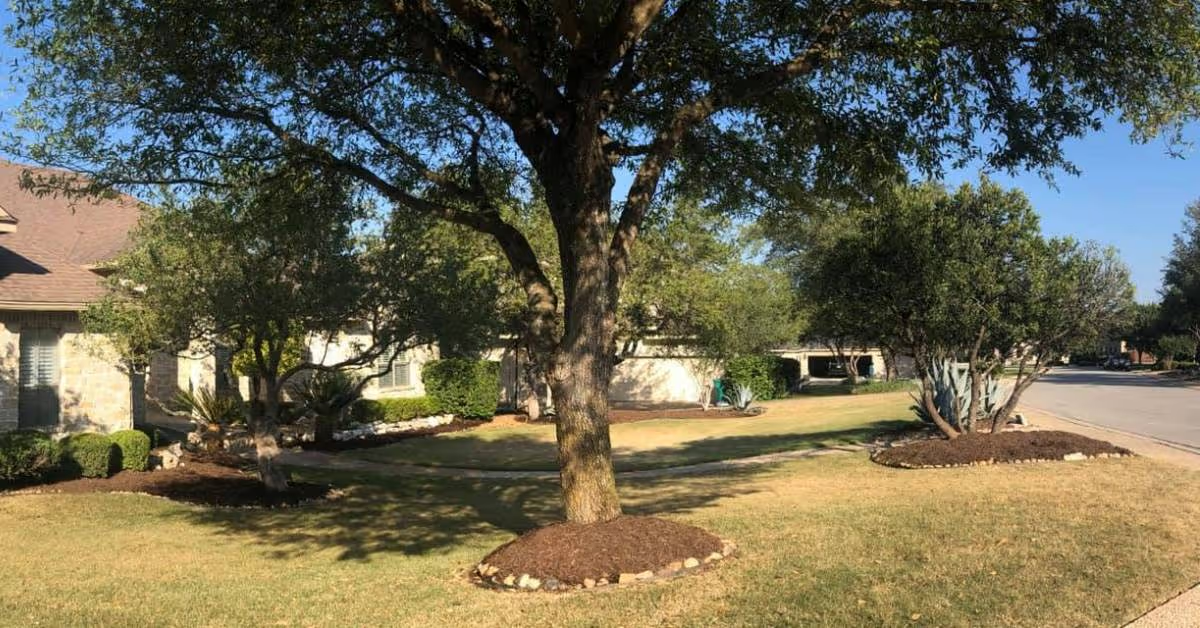
Once you have addressed an active outbreak, prevention focuses on reducing the conditions that favor the disease. Annual soil testing and gradual pH adjustment toward 6.0–7.0, aeration to prevent compaction, watering practices that let the lawn dry between cycles, balanced fertility avoiding excessive nitrogen, and proper mowing height of 3 to 4 inches for St. Augustine all reduce risk significantly.
Many San Antonio properties benefit from preventative fungicide applications in early spring on a recurring schedule, especially if take-all has been present in the past.
Suspect Take-All Root Rot? Time Matters.
The earlier we treat, the more lawn we save. We are glad to come walk the property, examine the roots, confirm the diagnosis, and put together a treatment plan tailored to your situation. Serving San Antonio, Alamo Heights, Helotes, and the surrounding area.